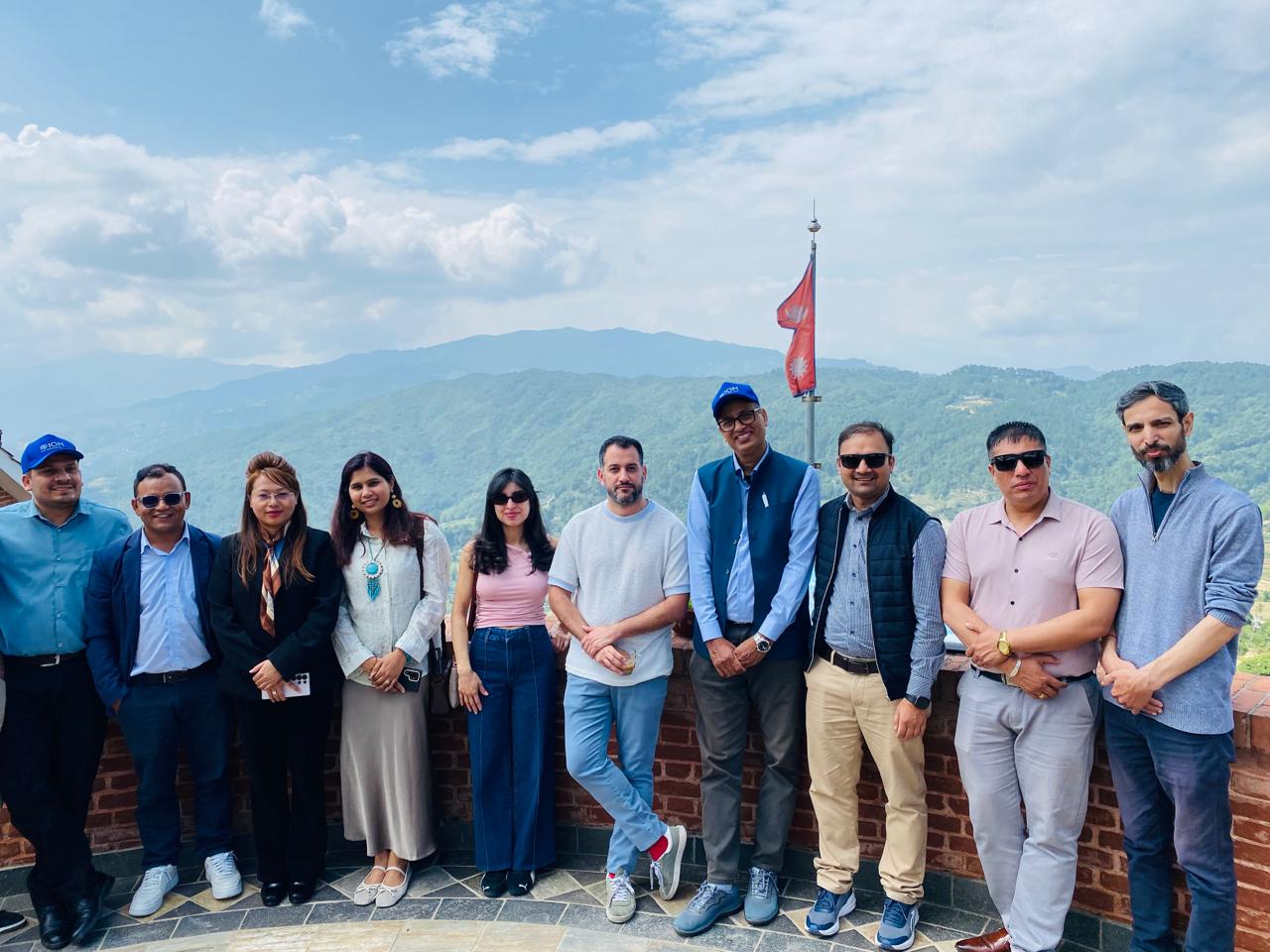
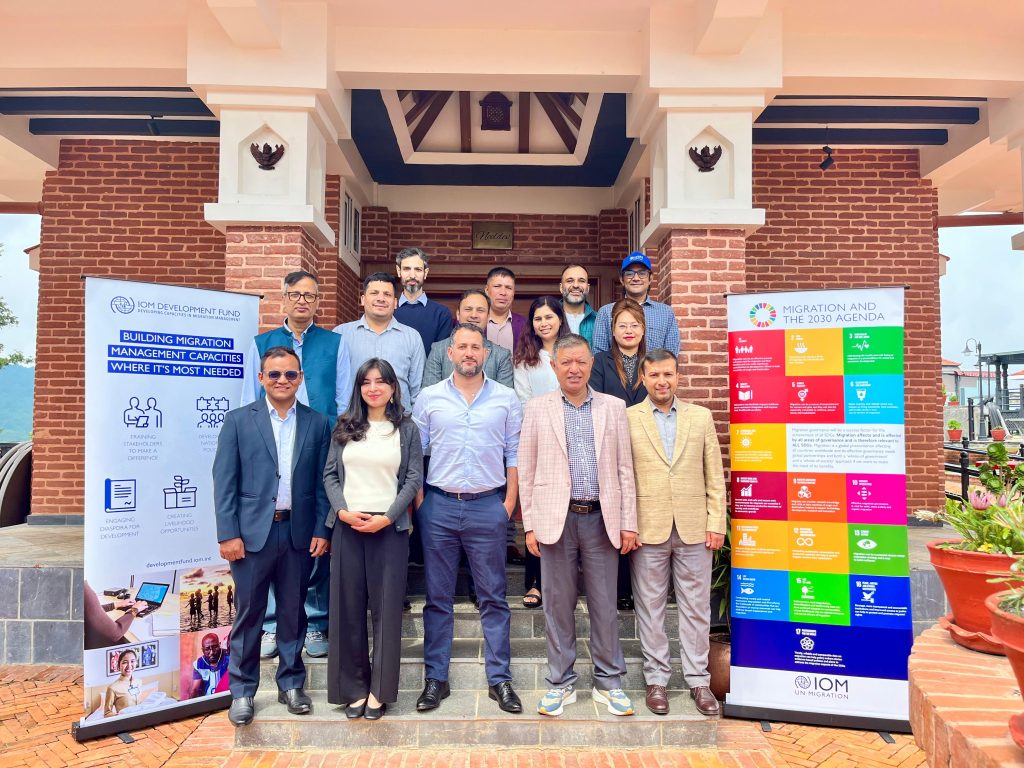
Saanvi Education is proud to share that our CEO, Mr. Santosh Budhathoki, successfully participated in the workshop on “Migration Research to Inform Migration Policy”, organized by IOM Nepal (International Organization for Migration) from 9–12 June 2026 under the IOM Development Fund Global Project.
This prestigious global project was implemented in only four countries worldwide—Angola, Moldova, Nepal, and Peru—making the selection process highly competitive and exceptionally selective. We feel honored and grateful that Saanvi Education was chosen to be part of this significant international initiative, representing a growing commitment to research excellence and evidence-based policy engagement in Nepal.
The workshop served as an important platform for strengthening knowledge and capacity in applied migration research, bringing together researchers, scholars, and professionals from diverse sectors. The program was specifically designed to enhance participants’ understanding of how high-quality research can directly contribute to the development of informed, practical, and impactful migration policies at national and international levels.
One of the most inspiring highlights of the workshop was the opportunity to learn directly from the Head of the UN Migration Research Department. The sessions delivered by global experts offered valuable insights into the role of rigorous research in addressing complex migration challenges and supporting effective policymaking. These discussions emphasized the growing importance of evidence-based approaches in understanding migration patterns, challenges, and opportunities in today’s rapidly changing global context.
Throughout the four-day workshop, participants engaged in intensive learning sessions focused on key aspects of migration research, including research design, methodology, policy analysis, data interpretation, and practical application of research findings. The training provided a comprehensive overview of both theoretical and practical dimensions of migration studies, enabling participants to develop stronger analytical and research skills.
A major takeaway from the workshop was the deeper understanding of the research–policy nexus. The sessions clearly demonstrated how researchers and policymakers can complement one another in creating informed decisions and sustainable migration strategies. Effective migration governance requires collaboration between academic researchers, institutions, and policy stakeholders, and this workshop highlighted the importance of building these bridges.
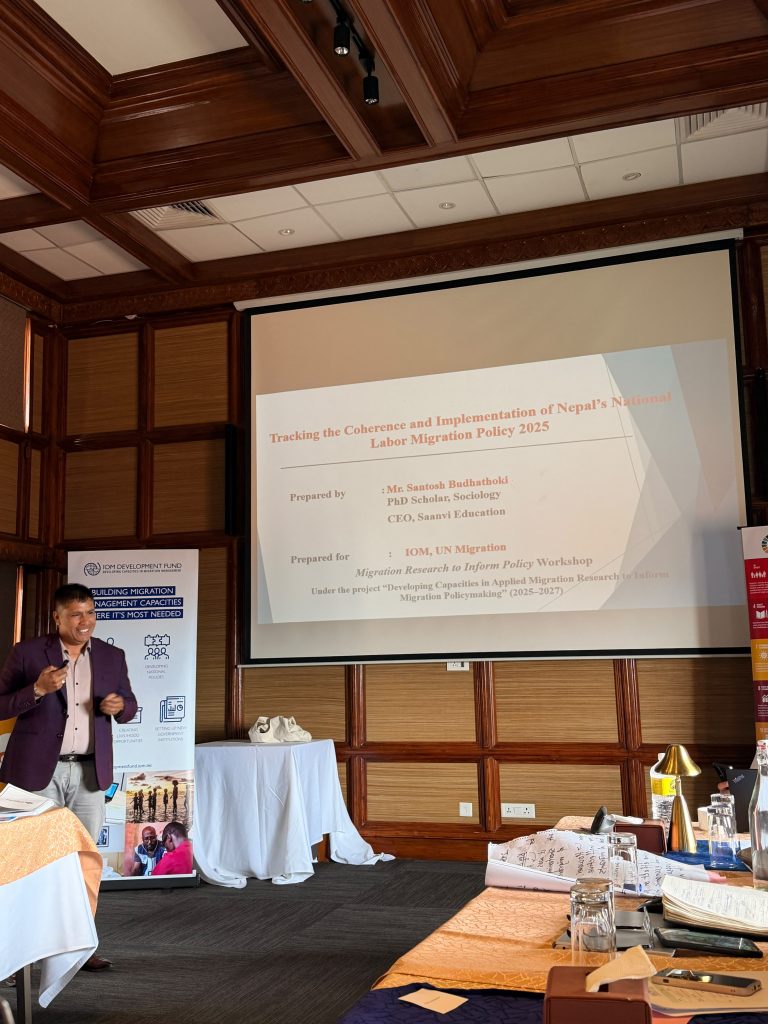
Key learnings from the workshop included:
- Development of a comprehensive understanding of migration research and research design
- Strengthening knowledge of evidence-based policymaking
- Enhanced understanding of the relationship between research and policy formulation
- Insights into how researchers and policymakers can collaborate effectively
- Improved capacity to design research that addresses real-world migration issues
At Saanvi Education, we strongly believe that research-driven knowledge and global exposure are essential for creating meaningful social impact. Participation in workshops of this scale strengthens our capacity to contribute to national and international conversations on migration, education, and policy development.
This experience has further reinforced our commitment to promoting high-quality research, academic excellence, and evidence-based decision-making. We believe that migration is not only a movement of people but also a multidimensional issue connected to economic development, education, labor markets, and social transformation. Therefore, understanding migration through scientific research is crucial for shaping better futures.
We extend our sincere gratitude to IOM Nepal and all facilitators for organizing such a valuable and enriching workshop. We are especially thankful for the opportunity to learn from leading global experts and engage with fellow researchers and scholars from across Nepal.
Saanvi Education remains committed to advancing research, fostering knowledge exchange, and contributing to policy-oriented academic initiatives that create positive and lasting impact.
