
A lecture series on 'Between Tradition and Transformation'
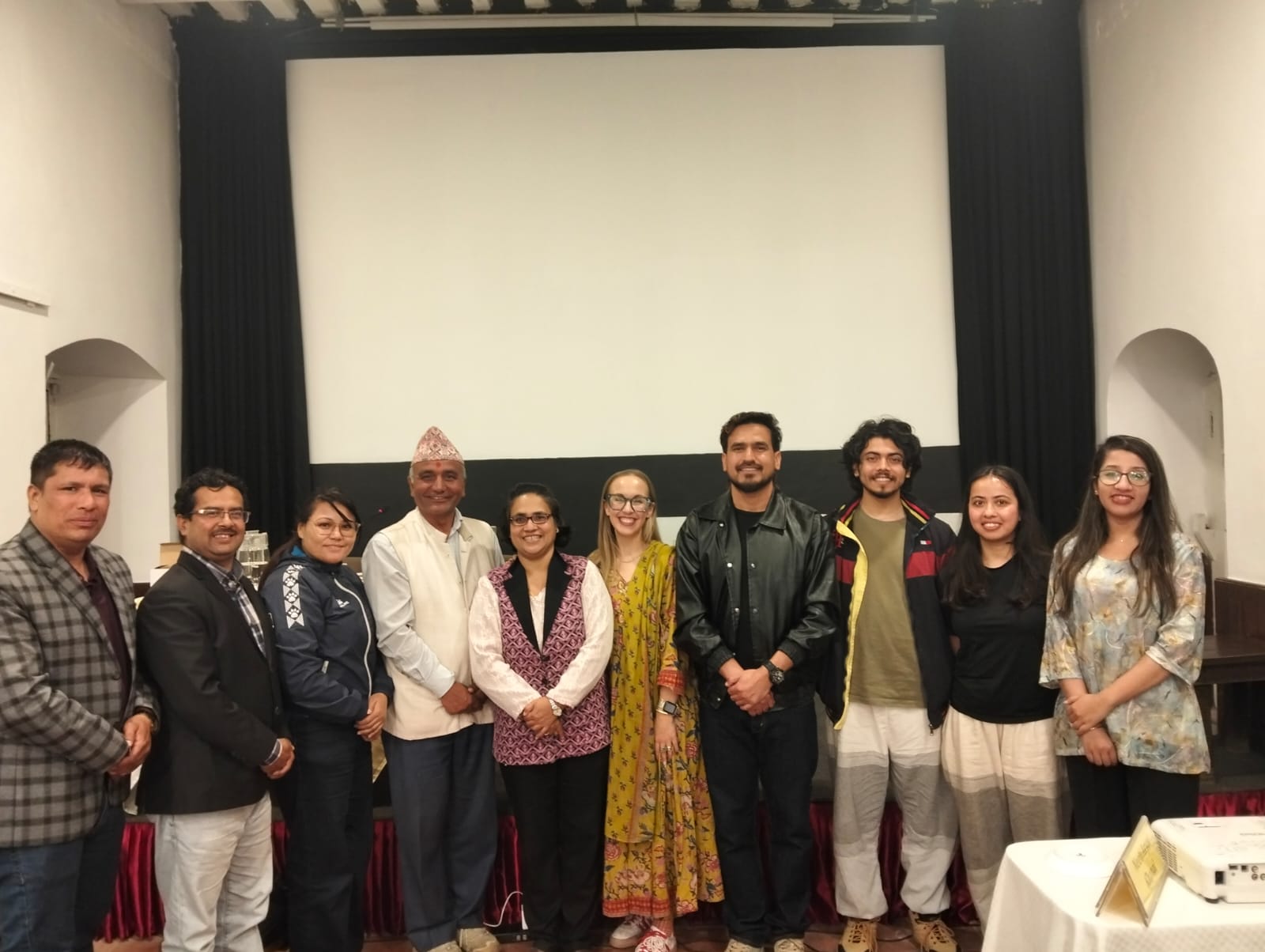
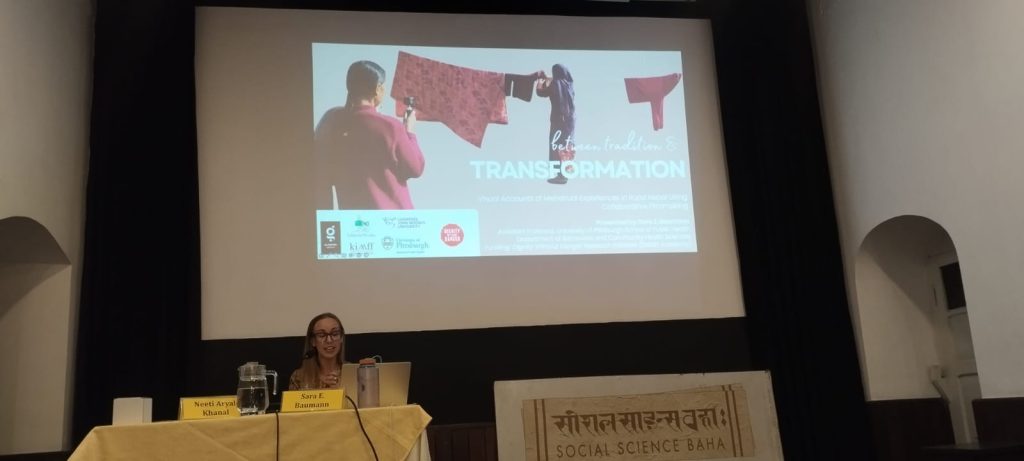
We are pleased to share that we attended an insightful lecture series titled “Between Tradition and Transformation: Visual Accounts of Menstrual Experiences in Rural Nepal Using Collaborative Filmmaking” organized by Social Science Baha on 7 May 2026. The lecture was delivered by Sara E. Baumann from the University of Pittsburgh School of Public Health. The session offered an engaging discussion on innovative qualitative and participatory research methodologies, particularly focusing on collaborative filmmaking as a tool for understanding sensitive social and public health issues in Nepal.
The lecture explored how visual storytelling and participatory filmmaking can be integrated into social science and public health research to capture lived experiences that are often difficult to document through conventional methods. The research presented during the session focused on menstrual experiences of women and girls in rural Nepal and examined the intersection between deeply rooted cultural traditions and changing social realities. Through collaborative filmmaking, participants themselves became active contributors in documenting and narrating their own stories, making the research process more inclusive, participatory, and community-centered.
One of the most inspiring aspects of the lecture was the emphasis on Collaborative Filmmaking as an emerging qualitative research methodology. Unlike traditional research approaches that rely heavily on written narratives and structured interviews, collaborative filmmaking incorporates visual, emotional, and sensory dimensions of human experiences. Participants are trained to create films, document their realities, and engage in co-analysis of the collected materials. This process enables researchers to generate nuanced and authentic insights while also empowering communities to voice their perspectives directly.
The session also highlighted the ethical dimensions of visual and participatory research. The speaker discussed the importance of informed participation, community engagement, representation, and protecting participant dignity while conducting film-based research. The methodology demonstrated how creative and arts-based approaches can strengthen qualitative inquiry and contribute to advocacy, awareness, and policy dialogue, especially in areas related to gender, health, and social transformation.
Attending this lecture series provided valuable exposure to interdisciplinary research practices that bridge public health, sociology, anthropology, and visual studies. It also offered important learning opportunities regarding innovative data collection methods, participant engagement, and knowledge dissemination strategies. The discussion encouraged researchers and practitioners to think beyond conventional methodologies and explore creative approaches for capturing complex social realities.
As an organization committed to educational development, research capacity building, and innovation in academic practice, attending such programs significantly enriches our understanding of contemporary qualitative research methodologies. The lecture inspired deeper reflection on how participatory and visual methods can contribute to more inclusive, ethical, and impactful social science research in Nepal and beyond.
We would like to express our sincere gratitude to Social Science Baha for organizing this meaningful and intellectually enriching lecture series, and to Sara E. Baumann for sharing her valuable research experiences and methodological insights. Such academic platforms play an important role in fostering dialogue, innovation, and collaborative learning among researchers, students, and professionals.
